What to Do If Parent's Mobility Is Declining
As movement gets harder, the risk of being stuck and unable to call for help grows. Daily check-ins close that dangerous gap.
Free forever • No credit card • iOS & Android
The Problem
Sound familiar? You're not alone.
They're unsteady on their feet and the fall risk is increasing
Getting around the house takes longer and exhausts them
You worry they'll be unable to reach their phone in an emergency
Physical therapy helped for a while but they have stopped going and their mobility is regressing
How I'm Alive Solves This
A simple solution that actually works.
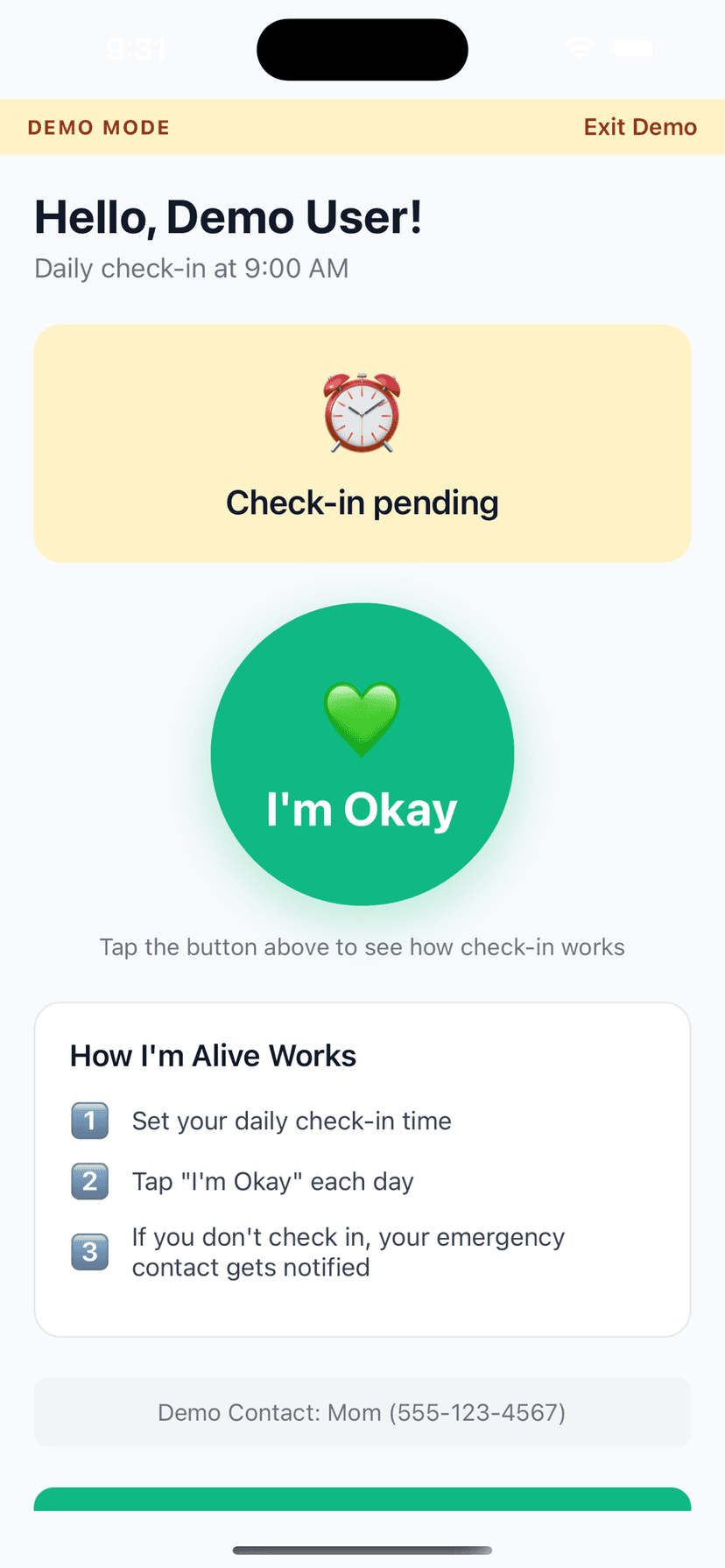
Daily check-in confirms they're mobile enough to interact with their phone
Missed check-ins may indicate a mobility-related emergency
Patterns of late check-ins can reveal gradual mobility decline over time
I'm Alive acts as an early warning system for mobility regression because the check-in itself requires them to reach and operate their phone, which becomes harder as mobility declines
How It Works
Three simple steps.
Set Your Time
Choose when to check in each day
Tap I'm Okay
One tap confirms you're safe
Auto-Alert
Miss a check-in? Contact is notified
Features
One-Tap Check-In
Large, easy button - done in seconds
Customizable Schedule
Set your perfect check-in time
Smart Alerts
Escalating notifications if you miss
Check-In Notes
Add context like 'Going hiking today'
History Tracking
See all your past check-ins
Free to Start
Core safety features always free
Frequently Asked Questions
They can barely walk now. Is a check-in enough?
It's a minimum safety layer. If mobility is severely limited, they may also need in-home care, physical therapy, or mobility aids. The check-in ensures daily monitoring on top of other supports.
What if they fall and can't reach their phone to check in?
Exactly the scenario check-ins catch. A missed check-in triggers your alert. You call, no answer, you send help. Without the check-in system, no one would know until someone happened to visit.
Should we modify their home for better mobility?
Yes—grab bars, stair rails, non-slip mats, and removing obstacles all help. Pair home modifications with daily check-ins for both prevention and detection of mobility-related incidents.
Their mobility is declining fast. What should I expect?
Discuss with their doctor about the trajectory. Track check-in patterns—increasing delays may reflect declining mobility. This data helps you and their doctor make informed decisions about care level.
They use a walker now and it takes them a long time to get around. Should I worry about the check-in being too hard?
As long as they can reach their phone at some point during the check-in window, they can complete it. Keep their phone within easy reach at all times, ideally on a surface near where they spend most of their day. If check-ins start arriving later and later, that itself is useful data indicating their mobility is declining further. Share that trend with their doctor and physical therapist to reassess their care plan.
Explore More Guides
Popular Use Cases
Compare Solutions
Browse Categories
Get Started in 2 Minutes
Download I'm Alive today and give yourself and your loved ones peace of mind. It's completely free.
Free forever • No credit card required • iOS & Android