What to Do If Parent Just Lost Their Spouse
Losing a life partner changes everything. Daily check-ins ensure your newly-alone parent has a safety net during the hardest time of their life.
Free forever • No credit card • iOS & Android
The Problem
Sound familiar? You're not alone.
They've never lived alone before and don't know how to manage
Grief is affecting their ability to care for themselves
The surviving parent is now at much higher risk of health decline
They have stopped caring about daily routines like eating, bathing, or taking medication since the loss
How I'm Alive Solves This
A simple solution that actually works.
Daily check-in provides structure during a time when everything feels chaotic
Monitors the grief-related decline that's statistically common after losing a spouse
Ensures someone is watching over them during the highest-risk period
I'm Alive gives their day a small but meaningful anchor point when everything else in their routine has been destroyed by loss
How It Works
Three simple steps.
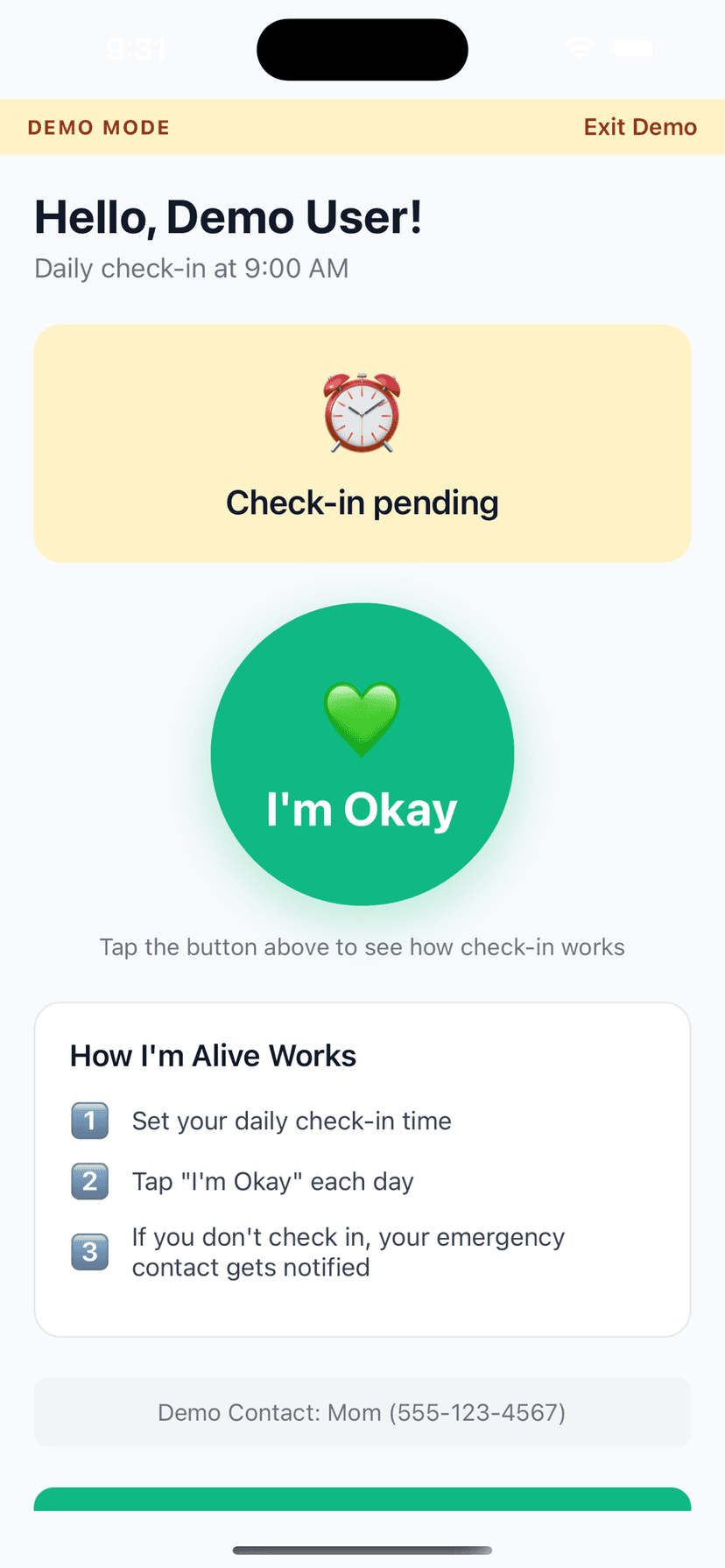
Set Your Time
Choose when to check in each day
Tap I'm Okay
One tap confirms you're safe
Auto-Alert
Miss a check-in? Contact is notified
Features
One-Tap Check-In
Large, easy button - done in seconds
Customizable Schedule
Set your perfect check-in time
Smart Alerts
Escalating notifications if you miss
Check-In Notes
Add context like 'Going hiking today'
History Tracking
See all your past check-ins
Free to Start
Core safety features always free
Frequently Asked Questions
They seem lost without their spouse.
This is completely normal. The first year after losing a spouse is the most dangerous for the surviving partner. Daily check-ins ensure someone is monitoring them through this critical period.
Their spouse handled everything—bills, cooking, medications.
Suddenly managing alone is overwhelming. Daily check-ins help you track whether they're coping. Follow up on check-ins to help them learn these tasks or arrange support services.
I'm worried about the 'widowhood effect.'
Research shows surviving spouses have elevated mortality risk, especially in the first months. Daily check-ins catch health declines early—exactly when monitoring matters most.
How long should I be extra vigilant?
The first year is highest risk, but ongoing monitoring is wise. Daily check-ins become a comforting routine that supports them well beyond the acute grief period.
It has been six months and they still are not eating or sleeping properly. Is this normal grief?
Grief has no fixed timeline, but six months of not eating or sleeping properly is a health concern regardless of the cause. Use your I'm Alive check-in data to document the pattern of missed or late check-ins over these months. Present this to their doctor as evidence that grief is affecting their physical health. There is a difference between normal grief and complicated grief that requires clinical intervention, and your daily data helps their doctor make that distinction.
Explore More Guides
Popular Use Cases
Compare Solutions
Browse Categories
Get Started in 2 Minutes
Download I'm Alive today and give yourself and your loved ones peace of mind. It's completely free.
Free forever • No credit card required • iOS & Android